

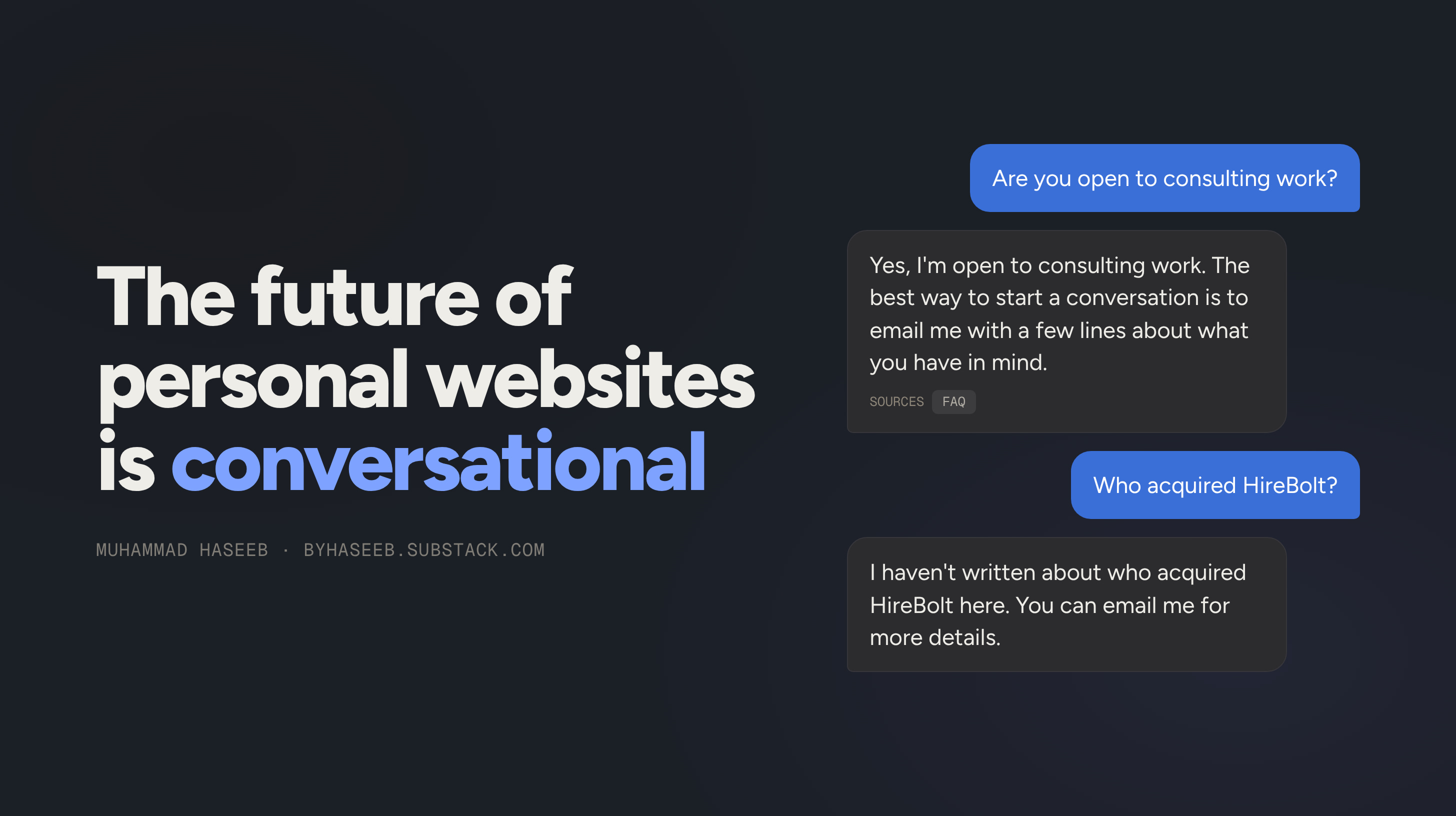
People who land on a personal website usually have one question. What has this person built? Are they any good? Are they open to work? How do I reach them?
Most personal websites answer that with a menu. About, Projects, Experience, Writing. Go find it yourself.
Mine was no different. I’d put real effort into those pages, and I suspect most visitors skimmed the first line of each and left. The answer they wanted was in there somewhere. They just had to dig for it.
So I tried something else. My homepage is now a chat. You ask a question and it answers in my voice, using only what I’ve written about myself, with links to where each answer came from.
I think the next personal website isn’t a page you read. It’s a conversation.
This is how I built it, what broke along the way, and what it costs to run. (Spoiler: nothing.)
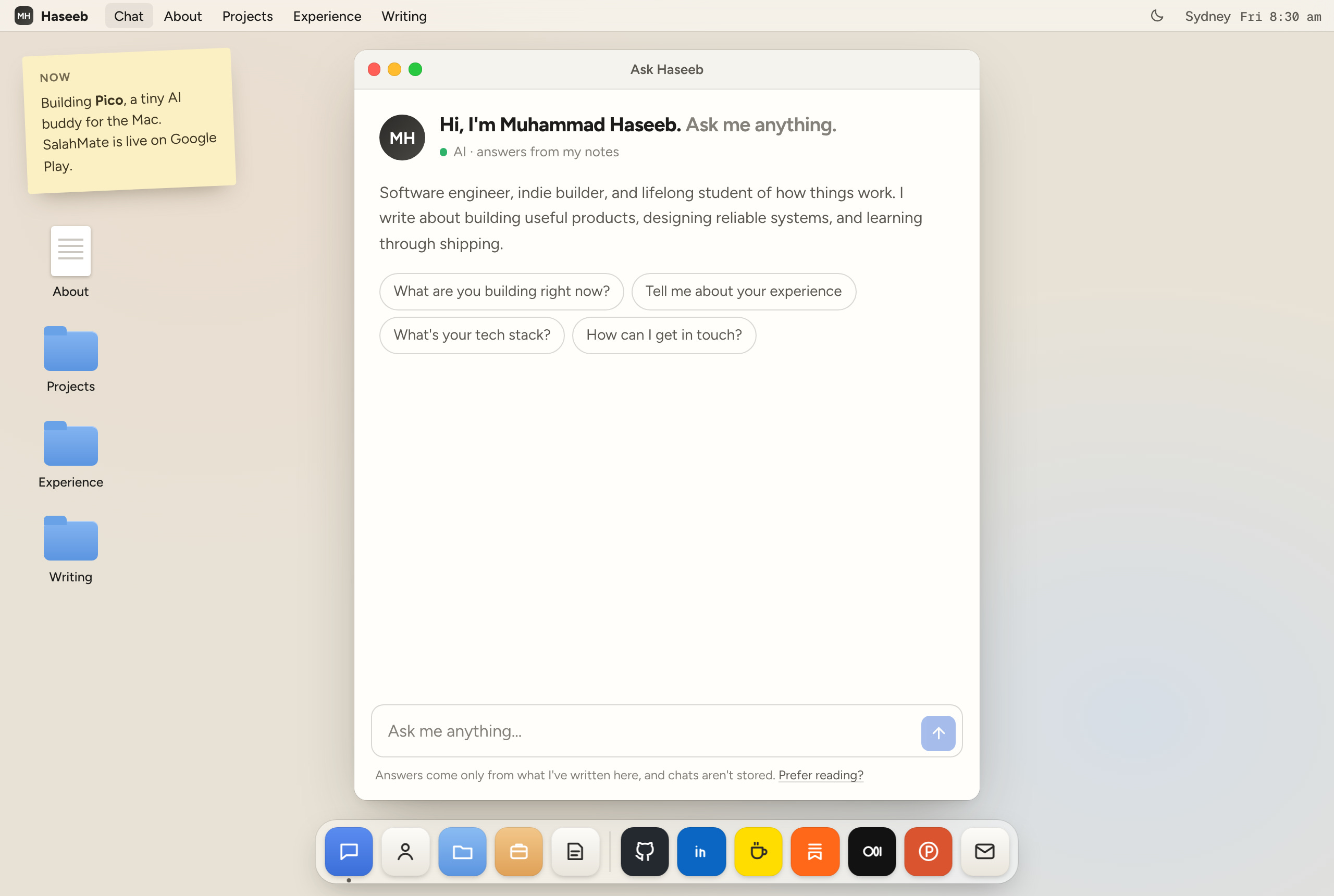
The rules I set myself
Before writing any code, I gave myself four rules.
No paid AI. A personal site shouldn’t come with a monthly AI bill. If it couldn’t run for free, I wasn’t going to build it.
It only says what I’ve written. No guessing, no filling gaps, no “creative” answers about my life.
It’s still a normal website underneath. Real pages, RSS, a sitemap, good SEO. The chat is the front door, not the whole house.
Content stays in markdown. I already keep my pages in markdown files. The chat had to learn from those, not from a separate database I’d forget to update.
The second rule turned out to be the hard one.